
Category : Right Step

blog Life at home Real Estate Right Step Smart Residential Living

Residential Societies take on Impressive Environmental Initiatives

Organic_Fruits&Vegetables_Garden

Residential Societies take on Impressive Environmental Initiatives

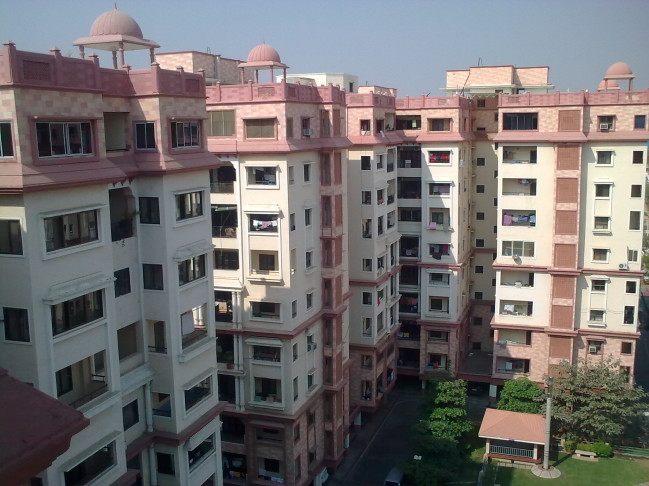
In today’s world, it is not enough for any country to solely focus on economic and industrial development and ignore the interests of the environment in the procedure. If the environment is not protected, very soon there will be no life on Earth and all development will be futile. In India, the sustainable model of development is being adopted so as to ensure the protection of the environment along with economic and industrial development. It must be borne in mind that it is not enough for only big companies and industries to follow this model of development. Even the residential housing societies and communities need to adopt this mode of development in order to make sure that such societies are independent self-sufficient and eco-friendly at the same time.

Let us take a look at the remarkable efforts made by some housing societies to achieve sustainable development in India:

Matoshree Pearl in Mahim, Mumbai:

This housing society is one of the many high-rises in the same area. With around sixty-five flats, the waste produced in managed in such an efficient manner that it can be later used to grow its own organic fruits and vegetables. It boasts of a self-sustaining waste-management procedure that recycles kitchen waste into organic compost. Moreover, in 2016, this society replaced all tube-lights and CFLs with LED lamps thereby conserving energy and thereby saving almost 40,000/- per month on electricity bills.

For more information, visit: https://www.thebetterindia.com/143646/mumbai-apartment-recycles-8000-kg-waste-own-organic-food/

Greenland-2 Society, Pune:

Greenland-2 society is located in the Vimannagar area of Pune. The fifty-seven flats of this society dealt with the problem of water-scarcity by installing a rainwater harvesting system in 2003. Before 2003, the scarcity of water would cost the society around 25,000/- per month on the tanks. After the installation of the rainwater harvesting system in their own society, the residents of Greenland-2 have not faced water –scarcity issues while most of the other flats face water scarcity. This arrangement has helped to save almost 24,000 liters of water per day. Moreover, the quality of water has also improved significantly.

For more information, visit: https://timesofindia.indiatimes.com/city/pune/Residential-society-chose-rainwater-harvesting-to-tackle-water-problem/articleshow/15484276.cms

Twin Star Cooperative Housing Society, Kurla, Mumbai:

This housing society located in the Kurla region of Mumbai has managed to cut off eighty-three percent of electricity charges by investing in a solar power generation system. The power generation system consists of sixty panels that generate almost 76 kilowatt-hours (kWh) electricity per day and 28,000 kWh electricity annually. This plant generates almost ninety percent of the energy that is required to light up the common spaces, parking spaces and also operate the water pumps and the lifts. According to the Ministry of New and Renewable Energy, such a solar power generation system can prevent more than 615 tons of carbon emissions over a period of ten years.

For more information, visit: https://www.hindustantimes.com/mumbai-news/mumbai-society-switches-to-solar-power-cuts-electricity-bill-by-83/story-4RHlKFDI0GBpRPWCdsfnKO.html

These housing societies have made praiseworthy efforts in the field of sustainable development. They continue to inspire housing societies all across India to opt for such eco-friendly procedures.

Read More
Affordable Housing blog Buying property Infrastructural development maintenance Real Estate Real Estate News Right Step Smart Residential Living Tips

Resale of flat in Mumbai ensures your returns on investment

Resale Flats

Resale of flat in Mumbai ensures your return on investment

Taking a look at what’s currently happening in the resale flat market might help with the decision making. Before selling off your old flat, you need to know whether it is the right time to sell or not. The resale property markets mainly depend on the new supply. If there is a short supply of new houses, the resale market in that region grows. Almost every part of Mumbai where availability of land is a concern, there are many areas where demand is high and new supply is poor or limited.

 Due to limited supply in Mumbai, there are high risks that people looking for resale of the flat will get the right and attractive price. On the other hand, in areas where new supply is significantly high, the property seller should wait for the right time to get a good return on their investment.

There are hardly any pre-used flats or old flats available in a place like Napean Sea Road, Malabar Hill, Mahalaxmi, Bandra, and Juhu. As a result, property prices in these locations are very high and almost constant. Some other places like Bandra-Kurla Complex, Andheri, Powai, Santacruz, Vile Parle, Dahisar, Mira Road, parts of Thane and Navi Mumbai have also experienced higher property rates. These areas are witnessing a huge growth in commercial centers, recreational places, and infrastructure development. Owing to affordability and connectivity to major business hubs, the appreciation of prices remains constant. Most of the people are on the lookout for affordable housing options and these areas offer majorly to the sales volume of affordable flats.

If anyone is planning to resale their flat, first consider how old it is, location, new supply in the region, and return on investment among others. The age of the building should not negatively hit the price of the flat. People who owned a flat for more than a decade should definitely look at an exit and reinvest in some new project. But those who have bought their flats 5 years back, then the returns won’t be good enough as prices have remained stagnant for this period. If the owner of the property wanted to sell a flat urgently due to reasons like poor maintenance of the building, ineffective housing society, etc., then the owner of the property needs to make sure that he gets a return on investment of at least 10% for each year.

 Recent judgments and benefits on resale properties:

In December 2018, the Bombay High Court ordered that stamp duty authorities can not seek stamp duty on past transactions for resold flat.

 Maharashtra government allows resale of MHADA’s 5% quota flats.

Read More
blog Buying property free car parking Real Estate Real Estate News Right Step Smart Residential Living

Consumer redressal body directs BMC to make one free car parking compulsory in Mumbai

Blog_Image Copy 3

To own a car has become the greatest need then the status symbol. The problem of car parking is constantly rising issue in the city of Mumbai as the numbers of cars are increasing day by day. And this increasing numbers of cars have given birth to the car parking issue in several cities.

The State Consumer Disputes Redressal Commission (SCDRC) has directed the Brihan Mumbai Municipal Corporation (BMC) to make it compulsory for builders/developers to provide one free car parking space with each apartment sold free of cost.Blog_Image Copy 3

The BMC is asked by The State Consumer Disputes Redressal Commission to amend its present Development Control Rules which currently allow a developer/builder to complete the sale of flats while providing few parking spaces. It has seen in the city that the builders charge an increased amount for the parking above the flat cost.

The commission has also mentioned a Supreme Court order which says that under the Maharashtra Ownership Flats Act (MOFA), a promoter or a builder has no right to sell any portion of a building which doesn’t come under the definition of a ‘flat’.

Calling car-parking an “essential amenity”, the SCRDC ordered the Mumbai Municipal Corporation, must take care of parking spaces while sanctioning a building plan to ensure that each flat purchaser gets one car parking space.

According to the existing Development Control (DCR) Rules in the suburbs, a builder is liable to provide only one parking space for four tenements each measuring over 35 sqm, among other terms.

The SCRDC panel also asked housing societies to frame by-laws accordingly to assure that each flat owner occupies a parking space. The panel also expressed that if car parking spaces are in excess, they can be reserved for visitors. In the case of less car parking space, by-laws should be formulated like a way that these are interchanged among flat buyers.

Builders who use part of the approved FSI to develop parking spaces will be, however, should be allowed to sell them at market rates or a high rate to new buyers.

Read More
Affordable Housing blog Real Estate Real Estate News rent control act Rental Right Step Smart Residential Living

New Tenancy Act in Tamil Nadu

Blog_Image Copy

 New Tenancy Act in Tamil Nadu:

Last week, Chief Minister of Tamil Nadu has begun an exclusive portal www.tenancy.tn.gov.in under a new act called The Tamil Nadu Regulations of Rights and Responsibilities of Landlords and Tenants Act 2017 which is meant to balance the rights of the tenants and owners. It also aimed at replacing the old Tamil Nadu Buildings (Lease and Rent Control) Act. 1960, also known as the Rent Control Act.

As per the terms of this law, all tenancy agreements should be written and shall be compulsorily registered with the rent authority.

In 2017, the state government had submitted the bill in the assembly to execute the tenancy act that will cover all the metropolitan areas but it was passed a year later.

Who will be the rent authority?
In this portal, people can create a tenancy registration number under the tenancy act utilizing which they can register their agreements with the relevant rent authority. Rent authorities would be appointed in every district, supervised by a deputy collector rank officer to settle the disputes between tenants and owners.

Will they establish Rent courts and tribunals under this act?
Yes, Rent court and tribunals will also be established as part of the new act in each district.

Specifications and highlights of TNRRRLT Act, 2017
Immediate Execution of the Act: The TNRRRLT Act came into effect on the 22nd February 2019, and the act also governs and mandates those tenancy agreements executed prior to the enactment of this law. Moreover, even people who have already rented out places will have to register their agreements with the concerned rent authority within the next 90 days.

Compulsory registration: Although the old Rent Control Act directed registration of the tenancy agreements going beyond 11 months or over Rs. 50,000 in value, the new act directs all tenancy agreements to be registered with the Rent Authority, regardless the term and value of the tenancy. It covers both commercial and residential occupancies including the use of educational premises but does not include the premises registered under the Factories Act, 1948.

Who can fill the application?
The application may be filed by both landlord and tenant.

Why written agreement and registration Require?
As per Section 4 of the Act, all occupancies shall be made by way of an agreement. Also in respect of verbal occupancies formed before the start of the Act, the individuals shall modify the terms of the tenancy in writing within 90 days from the date of notification of the Act.

Requirements under the Stamp Act: It is also mentioned in the new act that all tenancy agreements are to be stamped as per Article 35 of the Indian Stamp Act, 1899.

Independent Registration: Registration is independent under this new Act of registration needed under the Indian Registration Act. Both parties are still responsible to register the agreements as per the Indian Registration Act excluding registering the agreement with the Rent Authority under the new act.

Would this act cover leave, license, property management agreements?
The act is aimed to be a complete code of tenancy. License agreements being of a similar nature are also covered. As the registration under this act is mandated for tenancy/lease agreements. Therefore, despite the agreement is titled or termed ‘license’ or ‘leave & license’, ‘Property Management Agreement’, if the terms or titled of the agreement form any right in the immovable property, then such agreement has to be registered under this Act. The ‘terms’ of the contract will define the nature of the agreement and not the ‘title’ given to such agreement.

Is registration required on renewal?
The rules drafted in this matter direct that any renewal is treated as a fresh tenancy demanding registration again. Contrary to the old law, the process of registration has been made online and there is no fee for registration of the tenancy agreement, though, nominal service charges be placed by the portal for registration.

Read More
Product Updates Right Step Smart Residential Living

[Important] – Change in Service Tax Rate for Housing Societies, Additional Swachh Bharat Cess of 0.5% to be levied

TAX

As per the recent Service Tax(ST) notification circulars, vide Notification No. 21/2015-ST & Notification No. 22/2015-ST dated November 6, 2015, government has appointed November 15, 2015 as the date from which, “Swachh Bharat Cess” (SB Cess) at 0.5% of the service value, has to be levied on the value of all taxable services over and above the prevailing service tax rate i.e. the effective rate of Service Tax including SB cess will be 14.5% w.e.f November 15, 2015.

How are Housing societies impacted by this?

  1. If your monthly invoice value is more than Rs 5,000/-, you must be collecting & paying service tax( (Refer Jan 2014 Circular on Service Tax on RWAs for more details) at the rate of 14%.With the SB cess in place, the revised Service Tax rate shall now be 14.5 %.  This is applicable on Invoices with Invoice date on or after 15th November 2015.

  2. You would have to pay an additional of 0.5% as SB cess to your vendors, for any services rendered by them that come under service tax ambit.

What do you need to do?

  • Swachh Bharat Cess must be charged as a separate line item on the Invoice, wherever applicable, as well has to be accounted for separately. Hence, if you are using any sort of “manual” invoicing, where Service tax is added manually, you need to add another line item of Swachh Bharat Cess of 0.5% for Invoices generated on or after 15th November.

  • Swachh Bharat Cess is payable to Govt., however it cannot be claimed as an Input Credit. Hence, you will be charging your Residents now at 14.5% (if applicable) and paying your Vendors a total Service tax of 14.5%; however, the 0.5 % SBC will not be allowed as input credit against the service tax liability.

Using Commonfloor Groups’ Smart Accounting? We’ve got you covered:

For all Invoices dated after 15th November, and with Service tax applicable, we will automatically add another line item for Swachh Bharat Cess of 0.5% to such Invoices. No effort needed from your side!

Above change will be made to:

  1. All future invoices already created in the system OR
  2. Invoices raised after 15th November OR
  3. Recurring Invoices ( Smart Invoicing as we call it)

Please do cross-check the implications with your CA/ Auditor as well to ascertain the changes for any specific cases applicable for your society. Feel free to reach out to us, if you need any further information/ help from our side.

Wishing you all a very happy & safe Diwali once again!

Regards,

Team CommonFloor Groups.

P.S : In case you are not using Commonfloor Money Manager, you should certainly reconsider it and ask us for a demo to your association.

Read More
1 7 8 9 10 11 14